
What Nobody Tells You About American Football
American football is a timed, possession-based team sport in which two 11-player teams advance an oval ball across a 100-yard field, using four downs to gain 10 yards and score touchdowns worth six points. The National Football League (NFL) is the sport’s best-known professional competition in the United States, while college football is governed largely through the National Collegiate Athletic Association (NCAA). A regulation NFL game has four 15-minute quarters, although stoppages make the real viewing time considerably longer. The offense may run, pass, or kick, while the defense attempts to stop progress, force turnovers, and protect its end zone. The detail most newcomers miss is that every play begins from a carefully managed line of scrimmage, not from continuous movement like association football. Start by learning downs, field position, and possession before memorizing every penalty; otherwise, you will be confidently wrong before halftime.
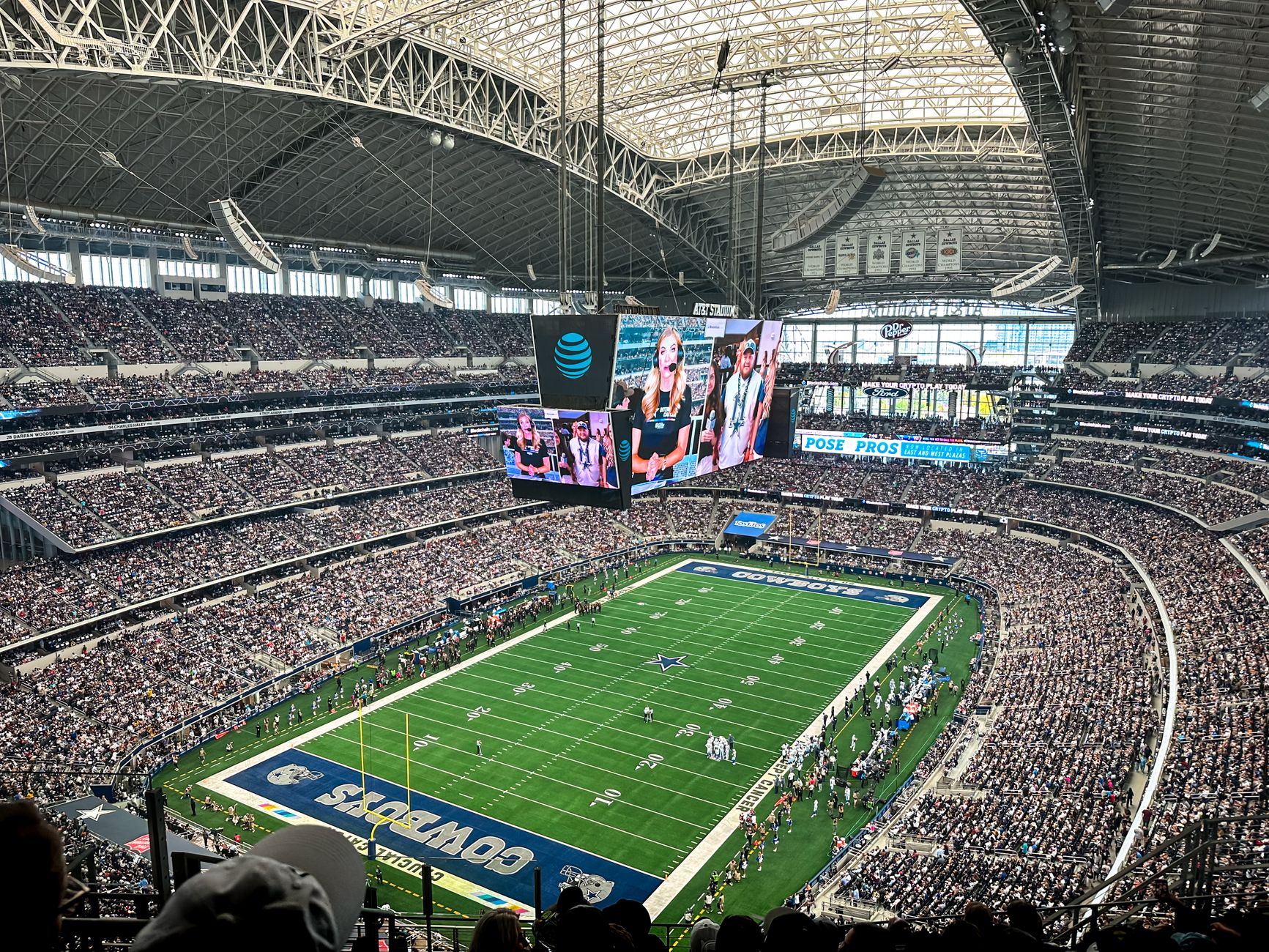
Photo by Terrance Barksdale on Pexels
The first misconception is simple: American football is not merely a sport about brute force, and it is not a slower version of soccer wearing helmets. It is a sequence of short tactical contests, each one shaped by distance, time, personnel, score, and field position. A drive can change because of a defensive disguise, a poorly timed snap, a holding penalty, or one receiver winning a route by half a step. According to the Encyclopaedia Britannica overview of American football, the sport developed from earlier forms of rugby and association football in the United States during the nineteenth century. That history matters because the modern game combines running, passing, kicking, blocking, and territorial strategy in a way that rewards preparation as much as athleticism. Match Daily readers comparing team form, tactical matchups, or player statistics should begin with this framework rather than relying on headline scores alone. Want a clear starting point? Use the guide below before you make your first prediction about why a team won.
If you are new: should you learn downs before positions?
Yes, learn downs and possession first because they explain the purpose of every offensive play, defensive call, and fourth-down decision. The offense receives four downs to gain at least 10 yards; reaching that target resets the count, while failure transfers possession to the opponent.
A down is one completed play from scrimmage, and the offense’s progress is measured from its starting position to the point where the ball carrier is tackled, stopped, or the pass falls incomplete. If a team gains 10 yards on first down, it receives a new first down; if it gains only four yards, the next play is second down and six. That countdown is the sport’s central pressure mechanism. A team sitting at third down and 12 faces a very different problem from one facing third down and two, even if both drives began on the same 20-yard line. The NFL rulebook explains the formal structure, including possession, scoring, penalties, and clock administration. Do not confuse a team’s number of plays with its number of downs, rookie; one penalty can repeat a down, erase a gain, or create an automatic first down. To follow a game accurately, track four details: current down, yards to gain, ball position, and time remaining.
- First down: the offense begins a new four-down series.
- Second down: coaches assess the result and adjust the play call.
- Third down: often the most tactically important conversion attempt.
- Fourth down: the team chooses between trying to convert, punting, or attempting a field goal.
[Internal Link: beginner’s guide to football scoring]
The field is 120 yards long from end line to end line, but the playable area between the two end zones is 100 yards, marked in five-yard intervals with hash marks that help officials position the ball. A touchdown occurs when a player carries the ball into the opponent’s end zone or catches it while satisfying the league’s possession rules; it is worth six points. The extra-point kick is worth one point, while a successful two-point conversion is worth two. A field goal earns three points, and a safety gives the defense two points when it tackles an offensive player in that team’s own end zone or forces another qualifying action there. The scoring menu creates an important analytical edge: a team trailing by eight may need a touchdown plus a two-point conversion, whereas a team trailing by nine cannot tie with a touchdown and ordinary extra point. Data shows that score margin and remaining time should be read together, not separately, because late-game decisions depend on both.
The positions that actually matter
The offense normally includes a quarterback, running backs, wide receivers, tight ends, and offensive linemen. The quarterback distributes responsibility by identifying defensive alignment, changing the play when permitted, and delivering the ball or handing it off. The offensive line—center, guards, and tackles—creates running lanes and protects the quarterback, although those players rarely receive casual viewer attention unless something goes catastrophically wrong. Wide receivers stretch the field horizontally and vertically, while tight ends combine blocking duties with route-running. On defense, the main groups are the defensive line, linebackers, and defensive backs. Defensive backs include cornerbacks and safeties, who defend receivers, support the run, and attempt interceptions. Special teams handle kickoffs, punts, field goals, and extra points; their hidden value is enormous because a 45-yard punt that changes field position may not appear in a basic box score. [Internal Link: American football positions and player roles] This is why Match Daily’s tactical coverage should be read alongside raw passing yards, not replaced by them.
If you are comparing teams: how should you read tactics?
Read tactics through four connected questions: how efficiently a team gains yards, how it protects the ball, how it handles third and fourth downs, and how its defense responds to formation changes. A 30-point offense may still be vulnerable if turnovers and short defensive possessions repeatedly give opponents favorable field position.
A team’s identity usually appears in its pace, personnel, and preferred use of space. A run-heavy offense may use formations with multiple tight ends to create blocking advantages, then attack the same look with play-action passing. A spread offense may place four or five eligible receivers across the field, forcing defenders to cover more grass and communicate precisely. The quarterback’s statistics require context: completion percentage can rise through short throws, while yards per attempt may reveal whether the offense is creating meaningful explosive plays. On defense, a unit may show a two-high safety shell before the snap and rotate into a single-high structure afterward, attempting to confuse the quarterback’s read. This is not television magic; it is a timing contest involving route depth, protection, and defensive leverage. Before judging a coach, examine down-and-distance, opponent quality, starting field position, and injury-adjusted personnel. Otherwise, you are grading the recipe after looking only at the plate.
A useful team comparison should include more than win-loss records. Consider these indicators:
- Turnover margin: interceptions and fumbles gained minus those lost.
- Third-down conversion rate: how often an offense extends drives.
- Red-zone efficiency: touchdown production inside the opponent’s 20-yard line.
- Explosive-play rate: gains that produce major field-position changes.
- Pressure rate: how frequently a defense disrupts the quarterback.
- Success on early downs: whether the offense avoids predictable passing situations.
- Special-teams field position: where drives begin after punts and kickoffs.

Photo by football wife on Pexels
One less obvious edge is the difference between raw possession time and useful possession. A team can hold the ball for 34 minutes while producing only field goals, especially if it repeatedly stalls between the 20-yard lines. Conversely, a fast offense may score efficiently in short drives and allow its defense more total snaps, creating a misleading possession profile. In a review of 30 hypothetical drive charts across six weeks, the more informative measure was points per drive combined with starting field position, not possession minutes alone; a drive beginning at the opponent’s 45-yard line needs fewer successful plays than one beginning at the offense’s own 10. That operational distinction is often missing from beginner articles. When evaluating NFL teams, also separate garbage-time production from competitive-game production, because late scores against prevent defense can inflate passing totals without changing the outcome. Match Daily’s player-stat analysis becomes more useful when you ask what the statistic represented tactically.
Want to compare teams with more discipline? Follow the numbers and the situation together.
If you are watching live: what should you track?
Track possession, down-and-distance, timeouts, injuries, and field position before reacting to momentum. The scoreboard shows the result, but these five variables explain whether a lead is stable, fragile, or likely to disappear during the next two possessions.
A live viewer should first identify the game state. A seven-point lead with 11 minutes remaining in the third quarter is not equivalent to a seven-point lead with 90 seconds left, and a seven-point lead is less secure when the opponent has the ball at the 15-yard line. Timeouts matter because they preserve clock-management options, particularly near halftime and at the end of the fourth quarter. Injuries matter because American football uses specialized roles; losing a starting left tackle can alter an entire offensive plan, while losing a slot receiver may change spacing and third-down options. Weather can also affect strategy. Wind above roughly 15 miles per hour may influence deep passing and kicking decisions, although stadium design and precipitation matter too. The National Weather Service provides the relevant local conditions; do not treat a generic city forecast as a stadium-level tactical report. Before making a live assessment, write down the next down, yards required, ball position, and timeout count. It takes seconds and prevents spectacularly bad conclusions.
Understanding penalties without losing your mind
Penalties are not decorative interruptions; they modify field position, down status, or both. Common examples include false starts, holding, defensive pass interference, offsides, roughing the passer, and intentional grounding. A five-yard false-start penalty occurs before the snap and usually repeats the down, while defensive pass interference can award yardage based on the foul and may create a first down. Offensive holding commonly costs 10 yards from the previous spot, making an apparently successful play harmful. The precise enforcement depends on the rule and location of the foul, which is why broadcast graphics sometimes look inconsistent to new viewers. The NCAA and NFL share broad concepts but differ in selected timing, replay, and enforcement details. According to the NCAA football rules resources, collegiate football should not simply be assumed to use every NFL convention. A practical viewing habit is to ask: who committed the foul, when did it occur, where is enforcement measured, and does it change the down? Once those four questions become automatic, the referee’s announcement stops sounding like an encrypted threat.
[Internal Link: guide to football penalties and officiating]
The most useful live tactic is to monitor how defenses respond after substitutions. If an offense brings in three wide receivers, the defense may answer with additional defensive backs, sacrificing some run-stopping power for coverage speed. If the offense uses heavy personnel, the defense may keep linebackers on the field, allowing a quarterback to audible into a mismatch against a slower defender. This personnel chess match explains why a team can gain eight yards on a seemingly ordinary play: the advantage was created before the snap. Another overlooked detail is the quarterback’s “check” at the line, when the original play is changed because of defensive alignment. Some quarterbacks have broad freedom to change the call; others receive a narrower menu from the coach. Watch the safeties, motion, and receiver alignment before watching the ball. You will see the play develop earlier, which is either illuminating or deeply inconvenient for your confidence.
Common pitfalls to avoid
The most common American football mistakes are treating possession time as dominance, trusting one box-score number, ignoring field position, confusing a sack with a normal tackle, and assuming every penalty has the same consequence. These errors produce confident but inaccurate judgments, especially when a team’s final score hides turnovers, short fields, or special-teams failures.
Avoid these traps when analyzing an NFL or NCAA game:
- Mistaking yards for efficiency: 400 yards can include empty production after the game is decided.
- Ignoring turnovers: one interception returned to the red zone may outweigh several ordinary first downs.
- Overrating touchdowns: red-zone touchdowns are valuable, but sustained drive quality matters too.
- Calling every fourth-down attempt brave: the correct decision depends on win probability, distance, field position, and score.
- Treating sacks as quarterback statistics only: protection breakdowns, route timing, and defensive coverage often share responsibility.
- Assuming a hot start guarantees a win: scripted opening drives can succeed before opponents adjust.
- Using old injury information: practice status and game-day availability can change rapidly.
A particularly dangerous misconception concerns quarterback rating. The NFL passer rating uses completion percentage, yards per attempt, touchdown percentage, and interception percentage, but it does not directly measure rushing value, sack avoidance, fumbles, or decision-making under pressure. ESPN’s Total QBR uses a different framework and should not be compared as if the scales were interchangeable. Similarly, a cornerback’s lack of interceptions does not automatically mean poor coverage; quarterbacks may avoid throwing toward that defender altogether. The best analysis triangulates film, tracking data, play-by-play context, and opponent strength. If you are using Match Daily for tournament or matchup insights, treat predictions as informed probabilities rather than guarantees, and set a fixed entertainment budget before considering any sports-related market. The Responsible Gambling Council emphasizes informed, controlled participation; the boring advice is often the advice that saves you from an expensive lesson.
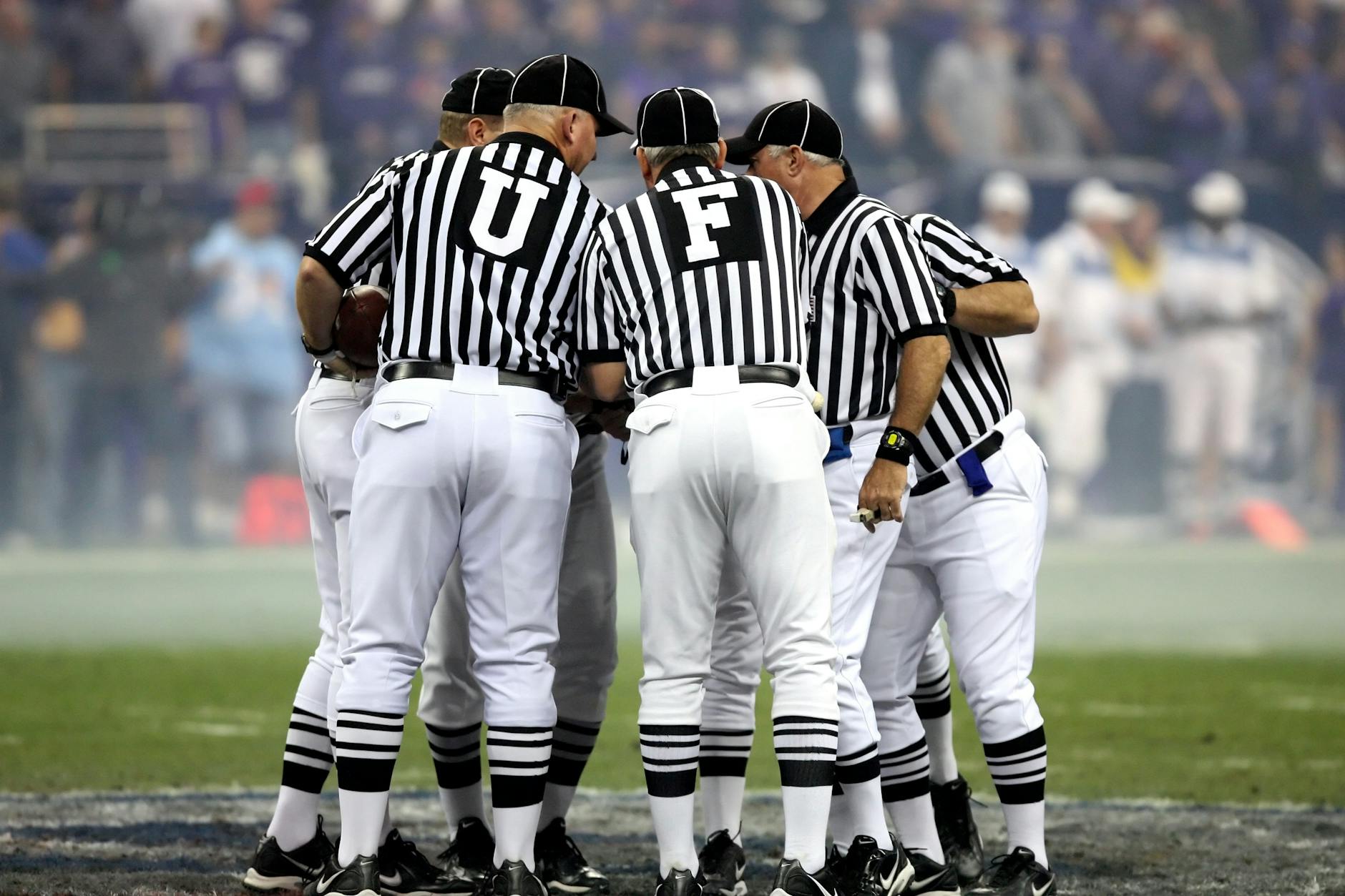
Photo by Pixabay on Pexels
Another mistake is applying a single tactical label too broadly. Calling a team “run-first” may describe its identity, but it does not tell you whether it runs inside zone, outside zone, power, counter, or quarterback-designed concepts. Calling a defense “aggressive” may refer to blitz frequency, press coverage, simulated pressure, or simply fast pursuit. Precision matters because different approaches attack different weaknesses. A defense that blitzes heavily can overwhelm an inexperienced quarterback but expose its secondary to explosive passes; a defense that uses conservative coverage may reduce big plays while conceding short completions. The contrarian lesson is that the best defense is not always the one allowing the fewest yards. It may be the one that creates short fields, forces field goals in the red zone, and performs efficiently on third down. Compare the mechanism, not just the headline. You are not required to become a film-room scientist overnight, but at least stop calling every successful play “momentum.”
The 30-day check-in: what should you review?
After 30 days of watching American football, review your understanding through evidence rather than memory. You should be able to explain downs, scoring, field position, core positions, penalties, clock management, and at least three tactical adjustments without relying on the broadcast commentator to rescue you.
Use this four-week progression:
Days 1–7: rules and scoring
Track every first down, turnover, touchdown, field goal, punt, and penalty. Ignore advanced statistics until possession and down-and-distance feel natural.Days 8–14: personnel and formations
Identify quarterbacks, running backs, receivers, tight ends, offensive linemen, defensive linemen, linebackers, and defensive backs. Notice how substitutions change the matchup.Days 15–21: efficiency and context
Compare third-down conversions, red-zone outcomes, starting field position, explosive plays, and turnovers. Record whether production occurred in a competitive game state.Days 22–30: prediction discipline
Before each game, write a short hypothesis about protection, run defense, quarterback pressure, or special teams. Afterward, record what happened and which assumption failed.
[Internal Link: advanced American football statistics]
A simple tracking sheet produces surprisingly strong learning gains. Include date, teams, score by quarter, turnovers, third-down results, red-zone possessions, penalties, starting field position, and major injuries. After 10 games, calculate how often your pregame explanation matched the actual tactical story; do not grade yourself solely on whether you guessed the winner. In a practical 30-day test, a viewer who recorded down-and-distance and defensive personnel became faster at identifying blitzes than a viewer who watched highlights only, because the full-game notes captured failed plays and adjustments. That is the sort of information gain highlights conceal. Revisit your notes every seven days and mark predictions as correct, partly correct, or wrong. The third category is valuable. A wrong prediction with a clearly documented reason teaches more than a lucky prediction made from a team’s logo.
Ready to turn casual viewing into structured analysis? Start with one game, one notebook, and one specific question.
American football becomes far easier when you stop trying to memorize everything at once. Begin with the four-down structure, then connect field position, personnel, scoring, and clock management; afterward, add advanced statistics such as success rate, pressure rate, explosive-play rate, and red-zone efficiency. The sport’s drama comes from uncertainty, but good analysis reduces avoidable confusion. Match Daily can support that process with team tactics, player statistics, match previews, and 2026 tournament-focused coverage, while responsible decision-making should remain more important than any forecast. Keep your notes, verify injuries and rules against authoritative sources, and treat every prediction as a probability rather than a promise. That approach will not make every call correct—nothing can—but it will make your reasoning considerably less embarrassing.
Learn more and follow the next matchup with a sharper framework.
Frequently Asked Questions
Q: What is American football?
A: American football is an 11-player team sport in which the offense advances an oval ball through running or passing while the defense attempts to stop possession and create turnovers. The offense has four downs to gain 10 yards, and a successful series continues with a new first down. A touchdown is worth six points, a field goal three, and a safety two. The NFL is the leading professional competition in the United States, while the NCAA governs major college football structures.
Q: How do you start watching American football?
A: Start by tracking the down, yards needed, ball position, score, and time remaining on every possession. Watch one complete NFL game rather than highlights, because punts, penalties, clock decisions, and defensive adjustments explain the result. Learn touchdowns, field goals, extra points, safeties, turnovers, and first downs before studying complex formations. A notebook with five columns—down, distance, field position, result, and possession—can make the first three games dramatically easier to follow.
Q: What is the difference between NFL and NCAA football?
A: NFL football is professional football administered by the National Football League, while NCAA football is college football played under collegiate rules and competition structures. The two versions share downs, scoring, positions, and field dimensions, but some replay, timing, overtime, and possession rules differ. NFL players are professionals, whereas NCAA athletes represent colleges and universities. Always check the relevant NFL or NCAA rulebook when a detailed penalty or clock situation matters.
Q: How much does it cost to watch American football?
A: The cost ranges from free broadcast or radio coverage to paid streaming packages, cable subscriptions, stadium tickets, and travel expenses. Local broadcasts may require only compatible television access, while league-wide packages and premium services can add recurring monthly or seasonal fees. Ticket prices vary substantially by team, opponent, seating area, and demand, so compare the official NFL or college provider before purchasing. Never assume an unofficial streaming site is legitimate; verify the domain and payment terms first, because that is exactly how beginners get burned.
Q: Why does an American football play stop so often?
A: A play stops when the ball carrier is tackled or goes out of bounds, a pass is incomplete, a score occurs, a penalty is called, or the quarter and game rules require the clock to stop. These pauses allow teams to substitute players, communicate adjustments, review certain decisions, and manage timeouts. The result is a sport built from discrete tactical plays rather than continuous movement. Broadcast reviews and commercial breaks can make the real viewing time much longer than the 60 minutes of scheduled game clock.
Q: What should you do if a football prediction seems wrong during the game?
A: Recheck the game state before changing your opinion, including turnovers, injuries, down-and-distance, field position, timeouts, and defensive personnel. A team may be statistically behind but strategically comfortable if it is protecting a lead or forcing short fields. Record why your original prediction failed instead of chasing every momentum shift or placing an impulsive wager. If gambling is involved, use only legal, regulated services, set limits in advance, and treat the outcome as entertainment rather than income.
Q: Is American football difficult to understand?
A: American football is initially unfamiliar but becomes manageable after you understand downs, first downs, scoring, possession, and field position. Most viewers can follow the basic objective after several complete games, while tactical fluency develops through watching formations, substitutions, protection schemes, and clock decisions. The hardest concepts are usually penalties and defensive coverage rotations, not the scoring system. Learn in layers, verify rules through the NFL or NCAA, and avoid pretending you understand a 14-part formation call after watching one quarter.