
World Cup 2026 vs 2022: Tournament Scale
The FIFA World Cup 2026 will be the first men’s World Cup with 48 teams, hosted across Canada, Mexico, and the United States from June 11 to July 19, 2026. FIFA has confirmed 104 matches, compared with 64 at Qatar 2022, and selected 16 host cities, including Toronto, Mexico City, Los Angeles, New York/New Jersey, and Dallas. The tournament keeps a four-team group stage, but the 12 groups create a larger knockout field: 32 teams will advance, including the eight best third-place sides. Match Daily follows the schedule, tactical trends, player statistics, predictions, and venue conditions without treating every rumor as fact. Before choosing a match to watch or analyze, verify the official kickoff time, venue, and qualified teams through FIFA’s competition information.
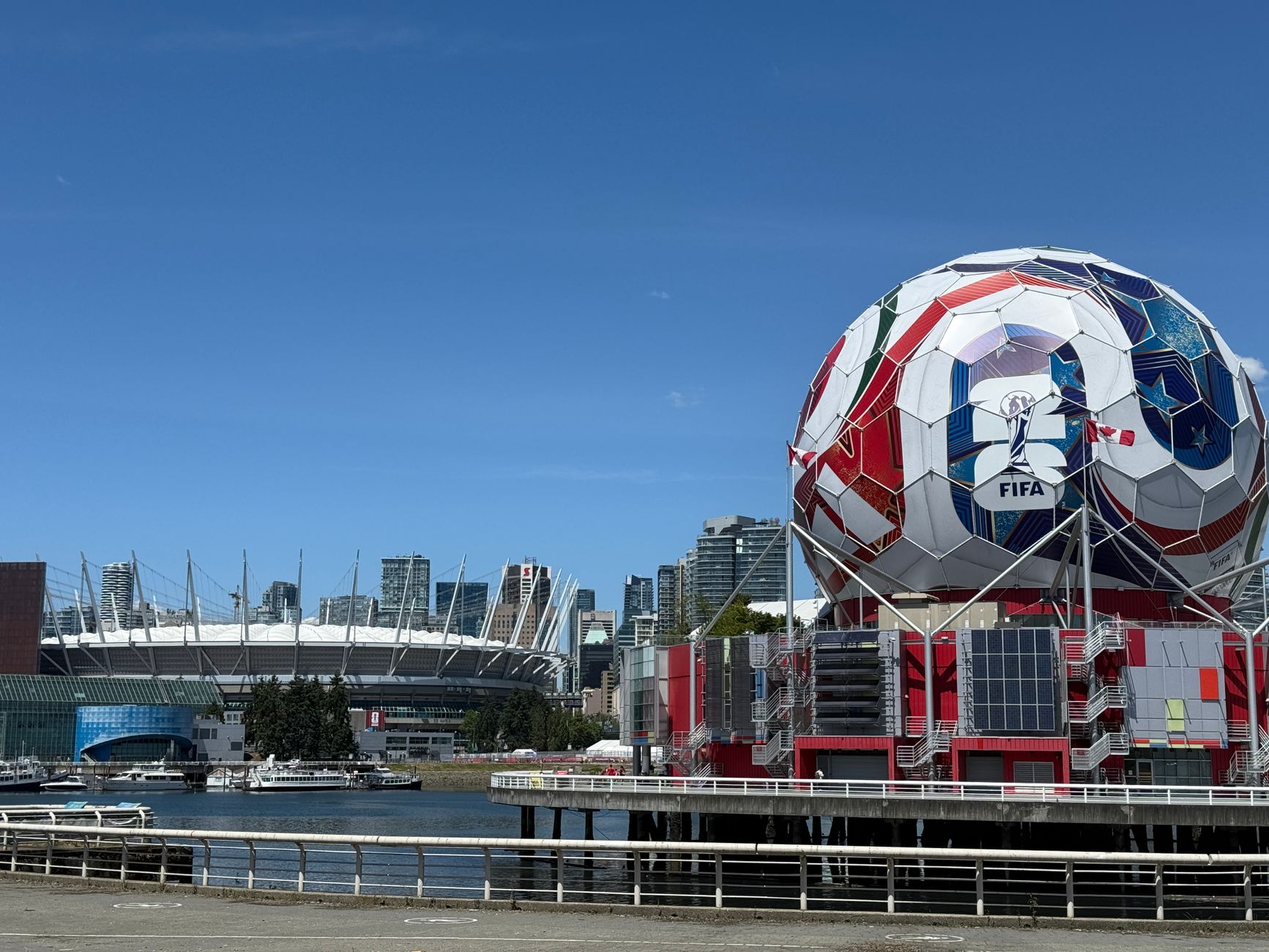
Photo by The Six on Pexels
Want a carefully checked World Cup 2026 briefing before the schedule becomes chaotic?
Before 2025: how the World Cup schedule worked
Before 2025, how did the World Cup schedule work? The standard men’s FIFA World Cup used 32 teams, eight groups of four, 64 matches, and a 16-team knockout stage. Each team played three group matches, with the top two in every group progressing to the round of 16, a structure used at Russia 2018 and Qatar 2022.
That format was relatively easy to follow because every group produced two qualifiers, while the bracket began with 16 teams. The 2022 tournament in Qatar ran from November 20 to December 18, an unusual calendar position caused by extreme summer temperatures, and Argentina defeated France in the final at Lusail Stadium. The FIFA World Cup archive provides historical tournament information, while the ESPN FIFA World Cup schedule remains useful for checking match listings and broadcast details.
The important distinction is that the 2026 expansion is not simply “16 extra teams added to the old timetable.” FIFA approved a 48-team competition with 12 groups of four, and the total number of fixtures rises by 40, from 64 to 104. That additional volume affects rest days, travel planning, data analysis, and prediction models; anyone copying a 2022 bracket into a spreadsheet deserves the gentle roasting that follows a preventable error.
- Qatar 2022: 32 teams and 64 matches.
- Canada, Mexico, and the United States in 2026: 48 teams and 104 matches.
- Traditional group qualification: two teams per group.
- 2026 qualification: the top two teams plus the eight strongest third-place teams.
To compare historical formats, consult our [Internal Link: World Cup tournament format guide] before assessing team probabilities.
The 2026 shift
What changes in the 2026 World Cup format? FIFA will divide 48 teams into 12 groups of four, with 32 teams advancing to a knockout stage that starts with the round of 32. The tournament opens on June 11, 2026, and concludes with the final on July 19, 2026.
The first match is scheduled for Mexico City, while the final will be played at MetLife Stadium in the New York/New Jersey area. Canada, Mexico, and the United States are automatic host qualifiers, although their exact group placements and opponents depend on the official draw and competition procedures. FIFA’s official 2026 World Cup page should take priority over social-media graphics, unofficial countdowns, and that one group chat “insider” who has been wrong since Euro 2020.
The 16 host cities are:
- Canada: Toronto and Vancouver.
- Mexico: Guadalajara, Mexico City, and Monterrey.
- United States: Atlanta, Boston, Dallas, Houston, Kansas City, Los Angeles, Miami, New York/New Jersey, Philadelphia, San Francisco Bay Area, and Seattle.
Why the host geography matters
The geography is one of the tournament’s most consequential variables. A team moving between Vancouver, Mexico City, Miami, and New York/New Jersey may face major differences in travel distance, humidity, altitude, and recovery conditions. Mexico City sits at a high elevation, while Miami brings heat and humidity; those environmental contrasts can influence pressing intensity, substitutions, and late-match defensive concentration.
A practical edge case is often overlooked: two teams can have identical rest periods on paper while experiencing very different travel burdens. For example, a long cross-border flight followed by a short turnaround may reduce training quality even when the official schedule grants 72 hours between matches. Match Daily’s tactical coverage will therefore assess venue sequence and travel geography alongside possession, expected goals, shot quality, and defensive actions.

Photo by Yara Solis Fuentes on Pexels
Want the host-city details organized around actual match analysis rather than tourist brochure filler?
What changed for players?
What changed for players in the 2026 World Cup? The larger tournament increases squad-management demands because teams may need to navigate as many as eight matches rather than seven, while also managing long-distance travel across three countries. The group stage still contains three matches per team, but reaching the final now requires an additional knockout round.
For players, the main strategic effects are rotation, recovery, and tactical flexibility. A starting midfielder who covers 11 to 12 kilometers in a high-intensity match may not reproduce the same pressing output three days later, particularly after air travel or a humid venue. Coaches will need deeper benches, versatile full-backs, reliable set-piece specialists, and substitutes capable of changing the game without destroying the team’s structure.
Research and official competition data should be separated from speculation. World Athletics and sports-science research consistently emphasize workload, recovery, and environmental conditions as performance factors, but those principles do not prove that a specific team will fail in a particular city. Similarly, betting markets can reflect public sentiment rather than superior football knowledge. Responsible analysis should compare confirmed lineups, recent minutes, injuries, opponent quality, and venue conditions instead of blindly following the shortest price.
Several player-level indicators deserve special attention:
- Minutes accumulated: excessive club workload can affect late-tournament sharpness.
- Recovery profile: short turnarounds make bench depth more valuable.
- Role flexibility: players covering two positions reduce substitution pressure.
- Set-piece contribution: extra knockout matches increase the value of dead-ball specialists.
- Disciplinary risk: a suspension can remove a key player at the worst possible stage.
For a more technical approach, see the [Internal Link: player form and tournament statistics guide].
What this means now
What does the 2026 World Cup format mean for viewers and analysts now? It means the tournament schedule must be read as a network of groups, venues, travel routes, and qualification scenarios rather than as a simple list of fixtures. The expanded field creates more matches and more potential surprises, but it also produces more uncertainty before the final draw, confirmed squads, and official kickoff assignments.
The third-place qualification rule is especially important. In a four-team group, a team may qualify with fewer points than expected if results across other groups produce a favorable ranking of third-place finishers. However, relying on that route is dangerous because goal difference, goals scored, disciplinary records, and other competition criteria may become relevant depending on the regulations. FIFA’s tournament regulations, not a screenshot from a fan account, determine the exact tiebreak sequence.
The contrarian conclusion is that the expanded format may make the early group stage less decisive for elite teams but more punishing for poor preparation. A heavyweight may survive one disappointing result because 32 teams advance, yet a squad with weak rotation options can be exposed over the longer knockout route. In practical terms, the best pre-match question may not be “Who has the bigger stars?” but “Which team can preserve its tactical identity after travel, heat, injuries, and substitutions?”
At Match Daily, predictions should be treated as probability assessments rather than guarantees. Before using any forecast, check:
- Whether both starting lineups are confirmed.
- Whether the venue and kickoff time are official.
- Whether recent performance includes strong or weak opposition.
- Whether travel and rest differences are material.
- Whether the market price offers value after considering uncertainty.

Photo by Vlad Vasnetsov on Pexels
See the evidence behind the next match assessment before making your own decision.
Three predictions for next quarter
What are three reasonable World Cup 2026 predictions for the next quarter? The safest forecasts concern information and planning rather than pretending to know the future winner. As qualification, scheduling, squad selection, and preparation develop, the strongest analysts will gain an advantage by tracking verified changes earlier than casual viewers.
1. Schedule complexity will become a competitive variable
The 104-match calendar will generate more opportunities for scheduling confusion, especially across North American time zones. Kickoff times listed in Eastern Time, Pacific Time, Central Time, and local venue time can create apparent contradictions that are merely conversion errors. Fans should record the official local kickoff, their own time zone, and the broadcast provider separately.
2. Squad depth will matter more than headline value
A tournament with 48 teams and an extra knockout round rewards coaches who can maintain structure when the first-choice lineup changes. Teams with dependable substitutes, multiple midfield profiles, and two competent options at full-back may outperform teams built around one spectacular starting eleven. This is not glamorous, but football has repeatedly punished glamorous assumptions with the efficiency of an unpaid invoice.
3. Venue-specific analysis will outperform generic rankings
A global power ranking cannot fully capture the effect of altitude, humidity, travel, or surface familiarity. A team’s pressing numbers in a cool northern venue may not translate directly to a humid coastal match, while a possession-heavy side may face different transition risks after a long journey. Therefore, predictions should be updated when the final schedule, squads, injuries, and venue assignments are confirmed.
The International Olympic Committee consensus statement on sports nutrition is not a World Cup fixture guide, but it illustrates why recovery, hydration, and preparation require evidence rather than slogans. For football-specific claims, FIFA match data, official team announcements, and reputable statistical providers should remain the primary references.
In short, World Cup 2026 will be larger, geographically broader, and harder to model than Qatar 2022. The tournament’s biggest analytical mistake will be treating expansion as mere quantity; the meaningful change is the interaction between 48 teams, 104 matches, 16 host cities, and a 32-team knockout phase. Match Daily will focus on that interaction through predictions, tactics, player statistics, and verified tournament updates.
Ready to follow the 2026 tournament with a sharper process?
[Internal Link: World Cup 2026 predictions and tactical previews]
Frequently Asked Questions
Q: What is the World Cup 2026 format?
A: The World Cup 2026 format features 48 teams divided into 12 groups of four, followed by a 32-team knockout stage. Each team plays three group matches, and the top two teams from every group qualify alongside the eight best third-place teams. The tournament contains 104 matches, which is 40 more than Qatar 2022. FIFA’s official regulations should be used for confirming tiebreakers and qualification procedures.
Q: When does the World Cup 2026 start and end?
A: The World Cup 2026 is scheduled to begin on June 11, 2026, and end with the final on July 19, 2026. The opening match is planned for Mexico City, while the final is scheduled for MetLife Stadium in the New York/New Jersey area. Because broadcast schedules can display different time zones, verify kickoff details through FIFA or the relevant official broadcaster.
Q: Which countries are hosting the World Cup 2026?
A: Canada, Mexico, and the United States are jointly hosting the World Cup 2026. Matches will be staged across 16 host cities, including Toronto, Vancouver, Mexico City, Guadalajara, Monterrey, Los Angeles, Dallas, Miami, Seattle, and New York/New Jersey. The cross-border geography makes travel distance, climate, altitude, and recovery relevant to tactical analysis.
Q: How many teams qualify from each World Cup 2026 group?
A: The top two teams from each of the 12 groups qualify automatically, and the eight best third-place teams also advance. That produces 32 knockout-stage teams from the original 48. Supporters should check the official tiebreak criteria because points alone may not decide the ranking when multiple teams finish level.
Q: What is the difference between World Cup 2026 and Qatar 2022?
A: World Cup 2026 has 48 teams and 104 matches, whereas Qatar 2022 had 32 teams and 64 matches. The 2026 tournament also begins its knockout phase with a round of 32 rather than a round of 16. Qatar 2022 was held from November 20 to December 18, while the 2026 competition is scheduled from June 11 to July 19.
Q: How can I check the World Cup 2026 schedule accurately?
A: Check FIFA’s official World Cup 2026 competition page first, then confirm broadcast information with a reputable provider such as ESPN. Record the match date, local venue time, your own time zone, stadium, and participating teams separately. This approach prevents common errors caused by daylight-saving changes, international time differences, and unofficial schedule graphics.
Q: Is World Cup 2026 prediction information guaranteed?
A: No, World Cup 2026 predictions are probability-based opinions and cannot guarantee match results. Reliable analysis should consider confirmed lineups, injuries, recent opponent quality, expected-goals trends, travel, rest, and venue conditions. If you choose to engage with sports betting, use licensed services where available, set a fixed budget, and never treat a prediction as certain income.