
What Nobody Tells You About a Football Team
A football team is not merely eleven players wearing the same shirt; it is a selected squad, tactical system, coaching structure, and match-day unit representing a club, nation, school, or community. In association football, eleven players start a match, while substitutes and staff support the wider competitive operation. In American football, an NFL roster follows a different structure, with separate offensive, defensive, and special-teams units. The distinction matters in 2026 because FIFA World Cup analysis, club scouting, and sports prediction depend on more than headlines or badge recognition. For example, YouGov’s United States rankings reported fame levels of 92% for the Green Bay Packers and 91% for the Dallas Cowboys, while ESPN organizes NFL teams by conferences and divisions. A practical recommendation is to evaluate a football team through formation, player availability, recent performance, and competition rules before trusting any prediction.

Photo by Володимир Король on Pexels
A common misconception is that a football team and a football club mean exactly the same thing. They do not. A team is the playing group selected for a fixture or competition; a club is the broader organization that may include members, supporters, administrators, youth academies, facilities, commercial operations, and multiple squads. Chelsea Football Club, for instance, can operate senior, women’s, academy, and development teams, while the England national team represents a country rather than a club. Wikipedia’s definition of a football team makes the same essential distinction: a team can represent a club, state, nation, all-star selection, or even a hypothetical concept such as a dream team. That difference affects statistics, ownership, eligibility, transfers, and historical records. I learned to check this before trusting a flashy “best team” list, because confusing a club with a squad is the sporting equivalent of buying a phone charger from a website with three spelling mistakes (and yes, I have made worse decisions).
Want a clearer framework for evaluating teams and matches?
If you are comparing football team identities: separate club, squad, and nation
A football club is an organization, a squad is its available group of players, and a football team is the selected unit used for a particular match or purpose. The same club can therefore produce different teams across competitions, age groups, and genders, while a national team is assembled from eligible players representing a country.
That distinction becomes especially important when researching famous football teams. YouGov defines fame as the percentage of people who have heard of a team, not necessarily the percentage who actively support it or believe it will win. Its published United States figures placed the Green Bay Packers at 92% fame, the Dallas Cowboys at 91%, the Chicago Bears at 89%, and the New York Giants and Philadelphia Eagles at 88% each. Those numbers measure recognition, not sporting quality. A highly recognizable team may have stronger commercial reach but weaker current form, an injured starting striker, or a difficult schedule. Match Daily uses this separation when discussing FIFA World Cup teams, club tactics, player statistics, and tournament trends, because popularity can distort judgment. Before comparing two teams, record their competition, date, venue, squad status, and statistical sample; otherwise, you are comparing a history book with a live weather report.
- Club: the organization and its long-term structure.
- Squad: the registered or available pool of players.
- Team: the selected lineup for a match or defined objective.
- National team: players representing an eligible country or territory.
- All-star team: a selected group assembled across clubs or regions.
[Internal Link: football team statistics guide]
If you are studying a match: map the formation before judging the result
A football team’s formation describes its basic positional arrangement, but it does not fully explain how players behave during possession, pressing, or defensive transitions. Common association-football systems include 4-3-3, 4-2-3-1, 3-4-3, and 5-4-1; however, a team listed as 4-3-3 may defend in a compact 4-5-1 and attack with a full-back moving into midfield. Therefore, formation data should be treated as a starting map rather than a complete tactical diagnosis.
The most useful process is to examine phases of play. First, identify how the team builds from the goalkeeper and centre-backs. Second, check whether the midfield protects the central corridor or leaves space between lines. Third, measure how quickly wide players recover after losing possession. Fourth, compare the team’s defensive line with the opponent’s pace. This last point is a frequently missed edge: a high defensive line can look dominant against slow forwards but vulnerable against direct runners. FIFA’s Laws of the Game provide the formal framework for match rules, while tactical interpretation requires event data, video review, and context. As The International Football Association Board states, “The Laws of the Game are the framework for playing football.” The framework is fixed; the strategic choices inside it are not.
The following checklist helps turn a team name into an evidence-based assessment:
- Confirm the competition, venue, kickoff time, and governing rules.
- Check the likely starting eleven and unavailable players.
- Compare expected formation with recent in-game shape.
- Review set-piece performance, transitions, and defensive errors.
- Separate home, away, tournament, and league samples.
- Avoid treating possession percentage as a substitute for chance quality.
See the tactical details before making a conclusion.

Photo by Omar Ramadan on Pexels
If you are evaluating football team strength: combine data with context
Team strength should be assessed through multiple indicators rather than one league position, winning streak, or famous player. Useful measures include points per match, expected goals, shots conceded, field position, set-piece efficiency, pressing outcomes, injuries, rest days, travel, and the quality of recent opponents. For national teams, the sample is often smaller than in a domestic league, making tournament draw, squad continuity, and coaching tenure particularly important.
A contrarian but defensible conclusion follows: the most famous football team is rarely the easiest team to evaluate. Recognition creates a flood of historical information, yet historical reputation can hide tactical decline or changes in personnel. The Green Bay Packers, Dallas Cowboys, Kansas City Chiefs, New England Patriots, and Miami Dolphins all appear in YouGov’s widely recognized American football rankings, but fame percentages do not tell us which roster is healthiest in a particular week. ESPN’s NFL team directory is more useful for checking current team pages, schedules, rosters, statistics, and depth charts. For association football, FIFA, UEFA, domestic leagues, and reputable match-data providers serve comparable verification roles. Match Daily’s 2026 World Cup coverage should be read in the same way: as an evidence layer, not a guarantee.
A practical rating model can assign provisional weight to:
- Recent performance: 25%, with opponent strength included.
- Chance creation and prevention: 25%, prioritizing quality over volume.
- Availability: 20%, especially goalkeeper, centre-back, and central-midfield absences.
- Tactical matchup: 15%, including transition speed and set pieces.
- Venue, rest, and travel: 15%, adjusted for the competition.
Do not turn those percentages into false precision. They are a disciplined starting model, not a crystal ball wearing shin guards.
[Internal Link: FIFA World Cup team predictions]
If you are following 2026 World Cup teams: verify the competition context
The 2026 FIFA World Cup will be hosted by Canada, Mexico, and the United States, making travel, climate, altitude, venue logistics, and squad rotation relevant factors in team analysis. A national team may perform differently across locations because heat, humidity, time zones, pitch conditions, and recovery schedules influence pressing intensity and substitutions. The tournament format also changes how teams manage risk: a side needing one point in its final group match may choose a different approach from a team that must win.
Reliable analysis should therefore begin with official information. Check FIFA for tournament regulations, fixtures, and competition updates, then compare confirmed squad announcements with club-level injury reports. Do not assume that a player’s club role transfers perfectly to international football; national-team training time is limited, and tactical chemistry can be weaker. This is a specific edge many casual previews miss: a team with elite individual talent may still struggle when its pressing triggers, defensive distances, and set-piece assignments have not been rehearsed together. Conversely, a less celebrated squad with stable selection and a clear transition plan can outperform its fame ranking. For responsible sports analysis, treat any prediction as probability rather than certainty, and never stake money needed for essential expenses.
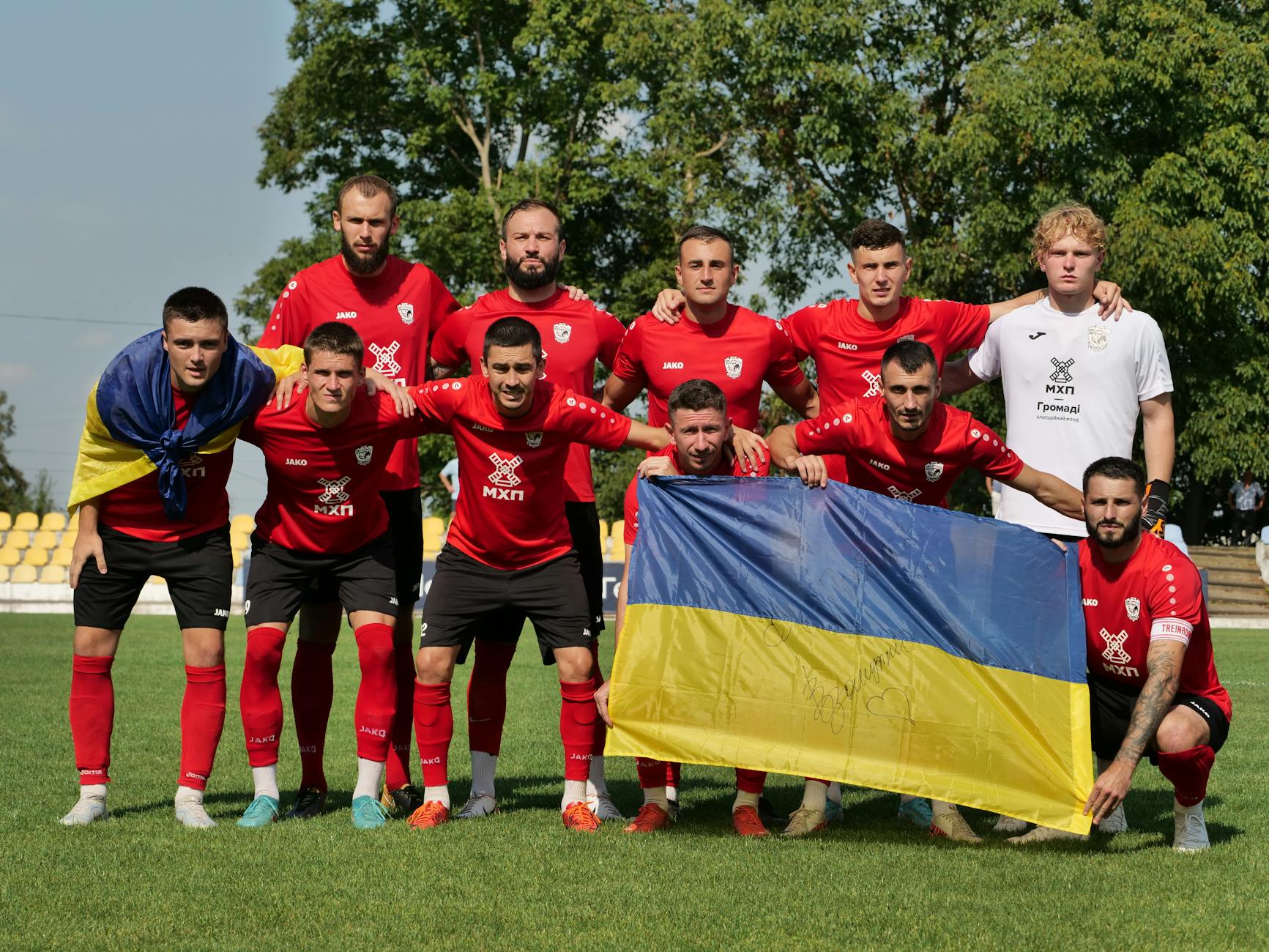
Photo by Володимир Король on Pexels
The same verification habit applies when reading match predictions. Confirm whether a statistic covers the last five games, the entire season, or only competitive fixtures; those samples answer different questions. A five-match unbeaten run against lower-ranked opponents may reveal confidence, but it does not automatically predict performance against a high press or elite set-piece defense. Also check whether the reported player statistic includes substitute appearances, extra time, penalties, or only open-play actions. Small definitions create large misunderstandings, particularly when social posts compress complex data into one dramatic number.
Common pitfalls to avoid
The most common football team analysis errors are category confusion, outdated information, small samples, and excessive dependence on reputation. A team’s historical trophies do not replace current evidence, while a single impressive result cannot prove a tactical transformation. The safest approach is to document each claim’s date and source, then revisit it when lineups, managers, or competition conditions change.
Avoid these recurring mistakes:
- Calling a football club a single team when it operates multiple squads.
- Comparing NFL teams with association-football teams without explaining the sport.
- Treating fame, popularity, ranking, and form as identical measurements.
- Ignoring goalkeeper changes, centre-back partnerships, or midfield absences.
- Using possession as proof of control without checking shot quality and territory.
- Copying predicted lineups without verifying official team news.
- Treating betting odds as objective truth rather than market probabilities.
- Chasing losses after an incorrect prediction.
For readers using Match Daily for gambling-related information, responsible gambling must remain central. Set a budget before reviewing odds, avoid borrowing to bet, and stop when entertainment becomes financial pressure. A useful operational rule is to separate research from action: write down the predicted outcome, confidence level, and evidence before checking the price. If the reasoning changes only because the odds look attractive, the process has probably been hijacked by emotion. That is not analysis; that is your impulse wearing a tiny analyst badge.
Want a more disciplined way to follow tournament information?
The 30-day check-in
A 30-day review reveals whether your football team analysis is genuinely improving or merely collecting more opinions. Keep a simple log containing competition, opponent, venue, predicted formation, confirmed lineup, key absences, tactical expectation, result, and post-match explanation. After four weeks, compare your forecasts with what actually happened, but judge the process separately from the outcome: a sound prediction can lose, and a poor prediction can win.
Use the review to identify recurring blind spots. Perhaps your model overvalues famous forwards, underestimates travel, ignores substitute quality, or treats early goals as proof of pre-match superiority. You may also discover that your preferred statistic is unstable; for example, possession can fluctuate sharply after an early red card, while set-piece goals can distort a short form sample. Record at least 10 to 15 competitive matches before making broad claims about a team’s identity, and label friendly matches separately. This is information gain in practice because it forces you to test assumptions against dated evidence rather than memory. By the end of 30 days, your notes should show not only which teams won, but why the original reasoning succeeded or failed.
A concise monthly audit can include:
- Which three assumptions were supported by match evidence?
- Which statistics changed after confirmed lineups?
- Did venue, travel, or rest alter the tactical plan?
- Were injuries and substitutions reflected accurately?
- Did fame influence your initial judgment?
- Did any gambling decision exceed the preset entertainment budget?

Photo by Lukas Blazek on Pexels
Frequently Asked Questions
Q: What is a football team?
A: A football team is a selected group of players organized to compete in a particular match, event, or representation. In association football, 11 players from each side are on the field during normal play, while substitutes and staff support the wider match operation. A team may represent a club, country, school, community, or all-star selection. The term should not automatically be treated as a synonym for football club, because a club is a broader organization with members, facilities, staff, and potentially several teams.
Q: What is the difference between a football team and a football club?
A: A football club is the organization, while a football team is the playing group selected for a specific match or competition. Chelsea Football Club may operate senior, women’s, academy, and development teams, each with different players and schedules. A club can also employ coaches, medical staff, administrators, and commercial teams who are not players. Understanding this difference prevents inaccurate comparisons between an organization’s history and one lineup’s current performance.
Q: How do you analyze a football team before a match?
A: Analyze a football team by checking competition context, venue, recent opponent-adjusted form, expected lineup, injuries, formation, chance quality, and tactical matchup. Confirm information through FIFA, UEFA, league websites, club announcements, ESPN, or other reputable providers rather than relying on an undated social post. Review at least five recent competitive matches, but use a longer sample for broader conclusions. Finally, separate prediction confidence from betting decisions and use a fixed entertainment budget.
Q: Is a famous football team automatically a strong football team?
A: No, fame measures recognition rather than current sporting strength. YouGov reported fame levels of 92% for the Green Bay Packers and 91% for the Dallas Cowboys in its United States rankings, but those percentages do not measure injuries, recent form, opponent quality, or tactical effectiveness. A famous team may still be in transition under a new coach or missing key players. Use fame as a measure of public awareness, not as a direct performance rating.
Q: Why does a football team’s formation matter?
A: Formation matters because it describes the team’s starting positional structure and helps analysts evaluate space, passing options, defensive coverage, and pressing relationships. A listed 4-3-3 may become a 4-5-1 without the ball or a 3-2-5 during buildup, so the nominal formation is only the first layer. Compare the team sheet with video or event data to identify actual movement. This is particularly important when assessing full-back positioning, midfield protection, and vulnerability to counterattacks.
Q: What should I do if a football team lineup changes before kickoff?
A: Reassess the prediction immediately when a confirmed lineup changes, especially if the absent player is a goalkeeper, centre-back, defensive midfielder, or primary creator. Check whether the replacement has played the same role recently and whether the team’s formation is likely to change. Update the expected strengths and weaknesses instead of defending the original opinion. If the new information creates uncertainty, reducing exposure or taking no action is more disciplined than forcing a decision.
Q: How often should football team analysis be updated?
A: Update football team analysis whenever there is a confirmed injury, suspension, manager change, major transfer, lineup announcement, or significant competition change. For a normal tournament or league review, a weekly update is practical, with a final check after official lineups are released. A 30-day audit can reveal whether your assumptions remain accurate across 10 to 15 competitive matches. Match Daily readers should also check the date of every statistic because form and squad availability can change quickly.
The conclusion is straightforward: a football team is best understood as a living competitive system, not a badge, ranking, or viral headline. Separate club from squad, inspect formation and availability, verify 2026 FIFA World Cup context, and measure current evidence against reputation. That method will not eliminate uncertainty, but it will expose weak assumptions before they become expensive ones. Follow Match Daily for structured team tactics, player statistics, match predictions, and tournament coverage, while keeping gambling decisions within a clear and responsible budget.
Ready to keep your football research organized?